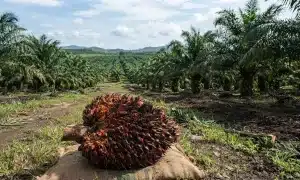
Indonesian Palm Oil News (IPO News), Jakarta — Djarum Group continues to expand its business portfolio. In the agribusiness sector, one of the main vehicles of the Hartono family is PT Hartono Plantation Indonesia (HPI Agro), a company that has developed an integrated palm oil plantation business in West Kalimantan.
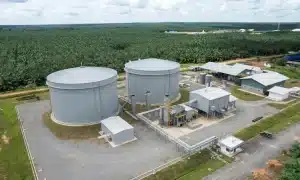
Established in 2008, HPI Agro has grown into a sizeable agribusiness operation, with palm oil remaining its largest business segment. Available company information indicates that HPI Agro operates more than 30 estates, six palm oil mills (PKS), and one kernel crushing plant. Beyond palm oil, the company has also expanded into sugarcane, essential oils and spices.
The scale of these operations shows that Djarum’s palm oil business is not simply a plantation investment. It has developed into an integrated agribusiness value chain, covering plantations, fresh fruit bunches (FFB) processing, palm oil production and commodity trading.
Robert Halim Leads HPI Agro
At the center of HPI Agro’s development is Robert Halim, who is listed as the company’s Chief Executive Officer and President Director. Under his leadership, HPI Agro has also pursued operational digitalization. The company has implemented SAP Business All in One as part of its digital infrastructure to support finance, procurement, production, maintenance, human resources and plantation operations.
For a company operating dozens of estates and mills, integrated digital systems are increasingly important in controlling costs, production, logistics and commercial activities across the palm oil value chain.
A Network of Entities Supporting the Palm Oil Business
The scale of HPI Agro’s plantation operations can also be seen from the numerous entities that have appeared in corporate mapping documents.
Among the entities listed are PT Bamboe Jaya Plantation, PT Borneo Muria Plantation, PT Daya Sumber Makmur, PT Gemilang Sawit Kencana, PT Kapuas Rimba Sejahtera, PT Lingkar Indah Plantation, PT Palma Asri Sejahtera, PT Palma Megah Mulia, PT Peniti Sungai Purun, PT Tanjung Indah Plantation, PT Global Kalimantan Makmur, PT Saban Sawit Subur, PT Landak Subur Plantation, PT Gapura Alas Makmur, PT Semai Lestari and PT Nusaraya Permai.
However, the list should be viewed as a historical corporate mapping, rather than automatically being treated as HPI Agro’s current list of subsidiaries. Corporate structures can change, and HPI Agro has previously issued responses concerning some entities appearing in such reports.
Operationally, HPI Agro’s presence can also be traced through industry supply-chain databases. For example, a Fuji Oil supply chain database lists Global Kalimantan Makmur – Kepodang as an HPI Agro mill in its active mill list.
Land Area Remains an Interesting Question
The size of HPI Agro’s landbank is another area that deserves closer attention, Publicly available sources contain different figures. One corporate mapping report recorded 153,562 hectares based on IUP data, while another 2026 source referred to more than 85,000 hectares, together with 32 estates, six palm oil mills and one kernel crushing plant.
Meanwhile, another 2026 recruitment source cited more than 187,000 hectares across five regencies. These figures should not simply be added together or treated as interchangeable because they may refer to different categories, including licensed areas, managed areas, planted areas, landbank and mature planted areas.
According to Indonesian Palm Oil News (IPO NEWS), this difference itself is an important area for further research: how much land does HPI Agro actually manage today, how much has been planted, how much is mature, how much is immature, and how much is currently undergoing replanting?
Those figures would provide a much clearer picture of HPI Agro’s actual production potential.
HPI Agro Is Not Only a Producer It Also Trades Palm Oil
One of the more interesting findings from IPO NEWS’ research is HPI Agro’s commercial and trading activities. onathan Widakdo, Head of Sales and Business Development at HPI Agro, is associated with market development and palm oil trading activities covering CPO, PKO and PKE. His professional profile also indicates experience in CPO, PKO and palm kernel sales, as well as sales planning and revenue management.
Another key name is Ricky Suryadinata, who is listed as CPO Trader and Market Insight Manager at HPI Agro. His professional profile indicates that he has been involved in CPO trading and market analysis at HPI Agro since 2018. Ricky previously gained experience as a CPO trader at Wilmar Nabati Indonesia.
There is also Fredrick Herman Soetikno, Commercial Manager at HPI Agro. His professional profile describes responsibilities involving CPO and palm kernel sales, as well as the procurement of FFB and shells.
These positions indicate that HPI Agro’s business does not end when FFB enters the mill. A dedicated commercial function is involved in CPO and kernel sales as well as palm oil market intelligence.
Where Does HPI Agro’s CPO Go?
This is perhaps one of the most interesting questions to explore further. Public supply chain documents provide evidence of HPI Agro related entities appearing in downstream industry supply chains. A Wilmar traceability database, for example, lists Hartono Plantation Indonesia Peniti Sungai Purun among mills in its West Kalimantan traceability data.
A Fuji Oil database also lists HPI Agro – Global Kalimantan Makmur – Kepodang as an active mill in its supply-chain information. However, these records do not provide sufficient evidence to conclude that Wilmar or Fuji Oil is the principal buyer of all HPI Agro’s CPO production. A supply-chain or traceability relationship should also be distinguished from a direct commercial transaction.
Therefore, the exact destination of HPI Agro’s CPO remains an important subject for direct confirmation from management, particularly regarding domestic buyers, export markets and downstream customers.
Replanting and Operational Efficiency
Entering 2026, HPI Agro has also continued strengthening its operational capabilities and human resources. Recruitment for plantation and technical positions indicates continued investment in its operational base.
On the plantation side, replanting has become an important part of the company’s lon term strategy. For a plantation group operating on a large scale, replanting is critical to maintaining sustainable FFB and CPO production over the coming decades.
At the mill level, the company is also focusing on efficiency, oil loss control, technology adoption and waste management. With six palm oil mills and one kernel crushing plant, downstream processing remains an important component of HPI Agro’s integrated business model.
Diversification Beyond Palm Oil
Although palm oil remains its largest business, HPI Agro is also expanding beyond the commodity. The company has developed businesses covering sugarcane, essential oils and spices, as well as agricultural research and new crop development and agro trading and partnerships.
This diversification demonstrates that Djarum’s agribusiness interests through HPI Agro extend beyond a single commodity and into a broader agricultural portfolio.
IPO NEWS: HPI Agro’s Business Map Still Holds More Data to Uncover
According to Indonesian Palm Oil News (IPO NEWS), HPI Agro is one of the private palm oil businesses worth watching closely because it has developed a relatively complete value chain from plantations and estates to palm oil mills, a kernel crushing plant, trading and market development.
What remains to be established through updated company data is the current plantation area, mature planted area, capacity of each palm oil mill, FFB production, CPO and kernel output, CPO sales destinations, domestic versus export market composition, and the company’s 2026–2027 replanting program.
With those figures, the true scale and direction of Djarum’s palm oil business would become much clearer, One point is already evident from the available information: Djarum’s palm oil business through HPI Agro is not simply about owning plantations. It has developed an integrated agribusiness ecosystem extending from the upstream plantation sector into processing and palm oil trading.
To subscribe or for more information, contact: Marketing Or Email
Need a research report? Please visit CDMI Consulting