First Half 2026 Sales Reach IDR 2.02 Trillion as Net Profit Rises and PALMO Builds a Strong Track Record Across Major Palm Oil Plantations
Indonesian Palm Oil News (IPO News) — As cost efficiency and productivity become increasingly important in Indonesia’s palm oil industry, fertilizer has emerged as a strategic factor in maintaining plantation performance. The issue is no longer simply how much fertilizer is applied, but how effectively nutrients can be delivered according to crop requirements, soil characteristics and environmental conditions.
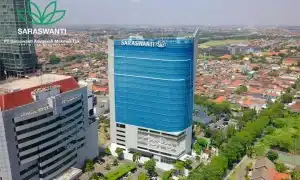
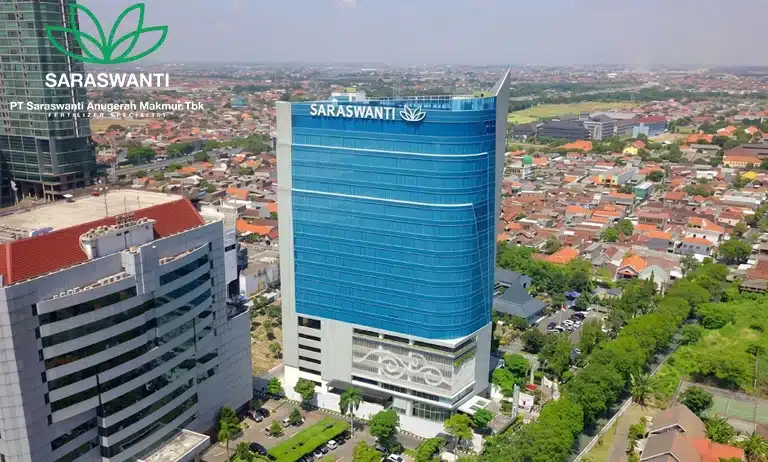
This is where PT Saraswanti Anugerah Makmur Tbk (SAMF) has established its position, As a producer of non subsidized NPK fertilizers, SAMF develops research based products with formulations designed to meet specific crop and regional requirements. Its palm oil portfolio includes PALMO and PUPINDO, while other product lines include FERTINDO and PHONIKA for various agricultural commodities.
What makes SAMF particularly relevant to the palm oil industry is its strong market concentration. According to the company’s Public Expose materials, approximately 98% of its plantation-commodity fertilizer sales are related to the palm oil sector.
In other words, when discussing SAMF, much of the company’s growth story is closely connected to the development of Indonesia’s palm oil plantations.
First Half 2026 Sales Reach IDR 2.02 Trillion
Entering September 2026, the latest financial performance provides a clear picture of SAMF’s business momentum. For the six month period ended 30 June 2026, SAMF recorded sales of approximately IDR 2.019 trillion, representing an increase of around 18.5% from IDR 1.704 trillion in the same period of 2025.
Profitability also improved, Gross profit reached approximately IDR 426.04 billion, up around 13.8%, while profit before tax rose approximately 18.9% to IDR 163.14 billion. Profit for the period reached IDR 127.65 billion, an increase of approximately 18.8% from IDR 107.48 billion in the first half of 2025.
Profit attributable to owners of the parent entity reached IDR 121.65 billion, up approximately 18.2%, Earnings per share also increased from IDR 10.04 to IDR 11.87 per share. The figures indicate that SAMF’s growth in 2026 is not merely reflected in higher sales volume, but also in stronger profitability.
More Than 500 Customers, Predominantly Palm Oil Corporations
One of the most interesting aspects of SAMF’s business is its customer base. In its corporate publications, SAMF states that it serves more than 500 customers for NPK briquette and NPK granular fertilizer products. The majority are corporate palm oil plantation operators, while a smaller portion operates in other agricultural commodities.
The company has also stated that its fertilizer sales reach approximately 400,000 tonnes per year, although this represents only a portion of Indonesia’s overall NPK equivalent fertilizer requirements in the palm oil plantation sector.
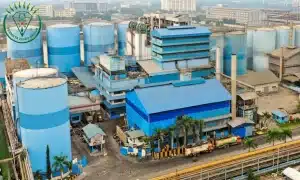
This indicates that SAMF still sees substantial room for market expansion, With five factories located across East Java, North Sumatra and Central Kalimantan, supported by a marketing network covering major plantation regions, SAMF is positioning its production and distribution infrastructure close to its core market.
Who Has Used PALMO?
This is perhaps one of the most interesting parts of SAMF’s story, In a research publication released by the company, SAMF disclosed that its PALMO fertilizer briquettes have been commercially applied by major palm oil companies since 2003.
According to the company’s published records, approximately 153 large plantation companies have used PALMO. SAMF has publicly identified a number of these companies, including:
PT Bumitama Gunajaya Abadi (BGA), PT Cipta Plantation Group, PT Hasnur, PT Bahruni, PT Semadam, PT Suka Damai, PT Perkebunan Sungai Putih, PT BW Plantation, PT Asam Jawa Group, PT Musi Rawas Group, PT Multi Prima Entakai, PT Sintang Raya, Perkebunan Sembawa, PT Sawitmas Parenggean, PT Mopoli Raya, PT Medco Agro, PT SJI (Meroke Group), PT Nesterwin, PT Monrad Intan, PT Pranasta, PT Sanggan Perkasa, PT Saraswanti Sawit Makmur and PT Mitra Agro Lestari.
The list provides an important illustration of how PALMO has penetrated Indonesia’s plantation ecosystem. However, it is important to clarify that these names represent companies identified by SAMF in its published records as having used PALMO. They should not automatically be interpreted as confirmation that all of them remain active SAMF customers in 2026.
For industry observers, nevertheless, the information provides valuable insight into the historical commercial application and market reach of SAMF’s fertilizer products.
PALMO and the Pursuit of Fertilization Efficiency
PALMO is not simply positioned as another NPK fertilizer, SAMF developed PALMO in briquette form, with characteristics designed to provide a slower release of nutrients. In its published research, SAMF reported that nitrogen release from PALMO can continue for approximately six months under certain testing conditions.
The company’s research also reported increases in fresh fruit bunch yields of approximately 3.2% to 16.8%, while fertilizer-use efficiency in peat and sandy soils was reported to improve by approximately 34.8% to 46.1%.
These findings form an important part of SAMF’s positioning as a research based fertilizer company. For large scale plantations, fertilizer efficiency has strategic implications. Improvements in nutrient use efficiency can potentially affect application costs, nutrient losses, labor requirements and ultimately plantation productivity.
This makes fertilizer technology tailored to soil characteristics and crop requirements increasingly relevant to modern palm oil operations.
Five Factories and a Distribution Network Close to Plantation Centers
SAMF is building not only products, but also the infrastructure required to serve its customers. The company operates five factories across East Java, North Sumatra and Central Kalimantan. Its marketing network covers a number of major plantation centers, including Medan, Palembang, Jambi, Pekanbaru, Surabaya, Jakarta, Yogyakarta, Sampit, Pontianak, Balikpapan and Banjarbaru.
This geographical footprint is strategically important because Indonesia’s palm oil plantations are spread across a vast area, Having production and distribution facilities relatively close to plantation regions can help fertilizer producers respond more efficiently to customer requirements while allowing them to better understand the specific characteristics of different plantation areas.
A Larger Balance Sheet Brings Working Capital Considerations
SAMF’s business expansion is also reflected in its balance sheet, As of 30 June 2026, total assets stood at approximately IDR 4.46 trillion, compared with around IDR 3.18 trillion at the end of 2025. Current assets reached approximately IDR 3.60 trillion, including inventory of around IDR 1.61 trillion, Total liabilities stood at approximately IDR 2.56 trillion, while equity reached approximately IDR 1.90 trillion.
The figures reflect a significant increase in business activity. At the same time, for a fertilizer producer, higher inventory and working capital requirements remain important factors to monitor, particularly because the business requires substantial raw material procurement to meet customer demand.
Therefore, one of the key considerations for SAMF in the second half of 2026 will be not only maintaining sales growth, but also managing working capital effectively as the business expands.
From Fertilizer to Palm Oil Productivity Ecosystem
SAMF can now be viewed as more than simply an NPK fertilizer manufacturer, With more than 500 customers, the majority of them corporate palm oil plantation operators, approximately 98% of plantation commodity sales linked to palm oil, and a documented history of PALMO applications across numerous major plantation companies, SAMF has established a close relationship with Indonesia’s palm oil ecosystem.
Its first half 2026 performance further strengthens that story, Sales of IDR 2.02 trillion and approximately 19% growth in net profit demonstrate continued market demand and provide a solid foundation for the company’s next phase of growth. At the same time, the size of Indonesia’s plantation sector and its continuing need for fertilizer indicate that significant market opportunities remain available.
For the palm oil industry, fertilizer is more than a production input. It is an integral part of maintaining plantation productivity, cost efficiency and long term sustainability. And amid those requirements, Saraswanti Anugerah Makmur is positioning itself as a research based fertilizer company growing alongside Indonesia’s palm oil industry.
To subscribe or for more information, contact: Marketing Or Email
Need a research report? Please visit CDMI Consulting