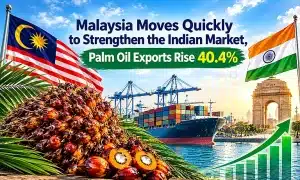
Indonesian Palm Oil News (IPO News), Jakarta — Malaysia is moving quickly to strengthen its palm oil position in the Indian market. Malaysia’s Plantation and Commodities Minister, Datuk Seri Dr. Noraini Ahmad, is leading an official mission to India from September 27 to October 1, 2026, aimed at expanding palm oil trade cooperation, strengthening business relations and opening new opportunities for value added palm oil products.
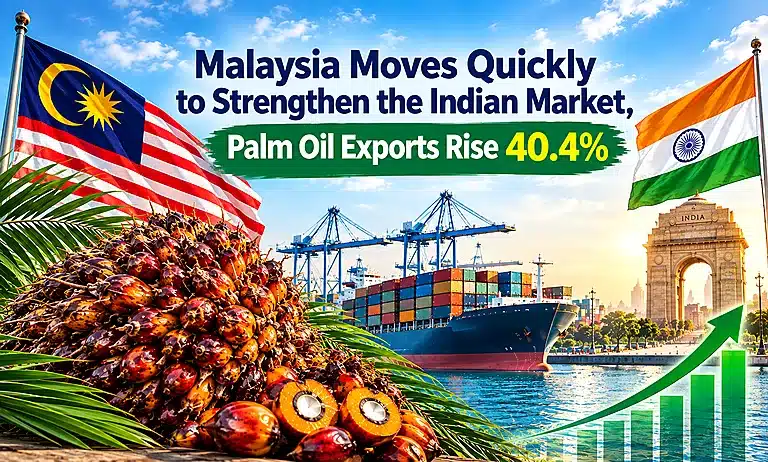
According to information received by Indonesian Palm Oil News (IPO NEWS), Malaysia’s move comes as its palm oil trade relationship with India continues to show significant growth. Malaysia exported 2.26 million tonnes of palm oil and palm based products to India during January-August 2026, an increase of 40.4% compared with the same period last year.
During the period, Malaysia’s share of India’s palm oil imports increased to 39.2%. The figures underline Malaysia’s growing position in one of the world’s largest vegetable oil markets.
India Remains a Strategic Market for Malaysia
India has remained Malaysia’s largest palm oil export market for 13 consecutive years. In 2025, Malaysia exported approximately 2.94 million tonnes of palm oil and palm-based products to India, with a total value of RM14.15 billion.
The importance of India is closely linked to the role of palm oil in the country’s edible oil industry. Palm oil accounts for around 51% of India’s vegetable oil imports and approximately 34% of total vegetable oil consumption.
This makes India more than simply an export destination for Malaysia. It is a strategic market that plays an important role in Malaysia’s long term palm oil industry strategy.
Malaysia Looks Beyond CPO
One of the most notable aspects of Malaysia’s latest mission is that its focus extends beyond CPO trading. The Malaysian Palm Oil Council (MPOC) said the mission will explore opportunities involving oleochemicals, specialty fats and other value added palm based products.
In Bengaluru, Minister Noraini is scheduled to meet the Karnataka government as well as Indian companies in the food, consumer goods and agri-technology sectors. Discussions will cover palm oil supply, downstream applications, sustainable sourcing, oil palm development, digital agriculture and stronger links between Malaysian suppliers and Indian manufacturers.
The strategy indicates that Malaysia is looking beyond the conventional export of commodities and is seeking to expand its presence in downstream and higher value palm oil applications.
India Becomes Increasingly Attractive
Malaysia’s latest move comes at an interesting time as India has recently changed its policy on vegetable oil imports. The Indian government reduced the Basic Customs Duty (BCD) on crude palm oil from 10% to 5%, lowering the import duty burden on CPO entering the Indian market.
For major palm oil producing countries such as Indonesia and Malaysia, the policy change could increase the attractiveness of the Indian market. At the same time, competition for market share is likely to become increasingly important.
Malaysia appears to be moving quickly by strengthening direct relationships among government institutions, industry organisations, Malaysian companies and Indian buyers.
Mumbai Becomes Another Key Stop
Following Bengaluru, the Malaysian mission will continue to Mumbai, On September 30, 2026, Noraini is scheduled to deliver a keynote address at Globoil India 2026, one of India’s major edible oil and fats industry conferences, which is expected to attract around 1,500 participants from across the global value chain.
She is also scheduled to meet senior representatives of the Solvent Extractors’ Association of India and other industry players to discuss market developments, supply requirements and opportunities for long term cooperation.
The meetings could provide Malaysia with an important platform to understand India’s evolving market needs while strengthening business networks with importers, processors, manufacturers and downstream industry players.
India’s Market Competition Is Becoming More Strategic
For Indonesia’s palm oil industry, Malaysia’s latest move deserves close attention, India is one of the world’s largest vegetable oil markets. As Indian demand and import policies create new opportunities, major palm oil-producing countries will increasingly compete to maintain and expand their market positions.
Malaysia currently has strong momentum. Its palm oil exports to India rose 40.4% during the first eight months of 2026, while its share of India’s palm oil imports reached 39.2%. At the same time, Malaysia is not limiting its offer to CPO. It is increasingly promoting oleochemicals, specialty fats and other value added palm based products.
For Indonesia, the development highlights that competition in the Indian market will increasingly involve more than CPO volumes. Downstream products, technology, sustainability and the ability to build long term industrial relationships are also becoming important elements of the competition.
With India becoming increasingly strategic, Malaysia’s latest move signals a broader shift in global palm oil competition: it is no longer only about who can sell more CPO, but also about who can build a broader and higher-value palm oil value chain.
Muslim M. Amin
Editor in Chief
Indonesian Palm Oil News (IPO NEWS)
To subscribe or for more information, contact: Marketing Or Email
Need a research report? Please visit CDMI Consulting