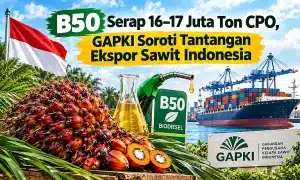
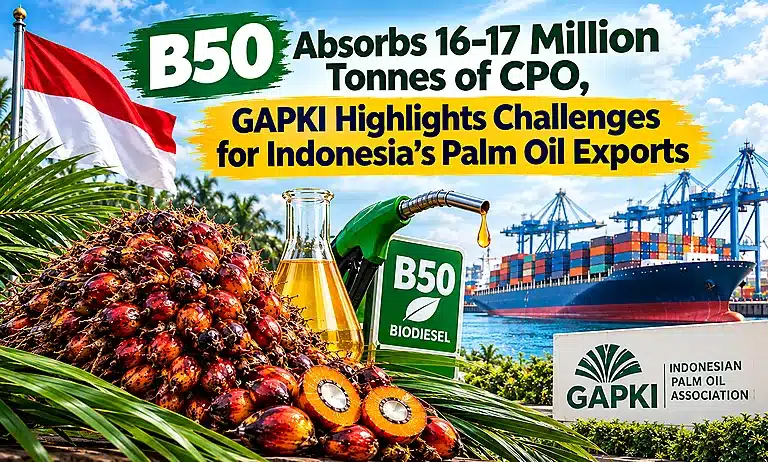
Indonesian Palm Oil News (IPO News), Jakarta — Indonesia’s implementation of the B50 biodiesel program is changing the structure of domestic palm oil demand, with the mandatory blending policy expected to absorb around 16–17 million tonnes of crude palm oil (CPO) annually when fully implemented.
B50, which raises the mandatory biodiesel blend to 50% palm-based biodiesel, has been in effect since 1 July 2026. The policy is expected to make the domestic energy sector an increasingly important destination for Indonesia’s CPO production.
According to information received by Indonesian Palm Oil News (IPO NEWS), the Indonesian Palm Oil Association (GAPKI) estimates that national CPO production in 2026 could reach approximately 53 million tonnes. GAPKI Chairman Eddy Martono has said that this level of production is sufficient to support the additional CPO requirement for the current implementation of B50.
However, the situation could become more challenging if domestic biodiesel demand continues to rise while CPO production fails to increase significantly.
Domestic Demand Takes Priority
GAPKI has emphasized that domestic requirements will be prioritized under the B50 policy. This means that if national CPO supply does not grow in line with demand, the adjustment is more likely to occur through lower export availability.
For Indonesia’s palm oil industry, this creates an important market dynamic. The country will have to balance three major demands: biodiesel consumption, domestic food and oleochemical industries, and exports.
GAPKI has indicated that Indonesia may need to increase annual CPO production to around 55-60 million tonnes in order to accommodate the growing domestic biodiesel requirement while maintaining sufficient supply for downstream industries and export markets.
The implication is significant because Indonesia remains one of the world’s largest palm oil producers and exporters. A larger portion of production being absorbed domestically could gradually reduce the volume available for international buyers.
Export Availability Could Tighten
The B50 program therefore does not simply represent a change in Indonesia’s fuel policy. It also has direct implications for the global vegetable oil market.
If production remains around current levels while domestic consumption rises, exporters could face a smaller pool of CPO for international markets. Some industry analysis based on GAPKI’s estimates has indicated that Indonesia’s CPO exports could decline by several million tonnes if production fails to keep pace with the additional domestic requirement.
At the same time, Indonesia must maintain adequate supplies for food products, oleochemicals and other downstream industries. This makes production growth increasingly important.
The challenge is particularly relevant because palm oil production cannot be increased immediately. Higher output depends on plantation productivity, improved planting material, better agronomic practices, fertilizer application, and the success of replanting programs.
El Niño Adds Another Risk
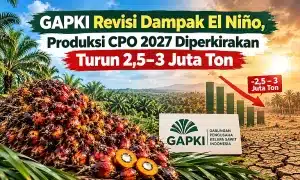
The production outlook could also face additional pressure from weather conditions, GAPKI has warned that a severe El Niño could reduce Indonesia’s CPO production by up to 5 million tonnes under an extreme scenario. Weather related production risks could therefore emerge at the same time that domestic biodiesel demand is expanding. If such a scenario occurs, the balance between domestic consumption and exports could become even tighter.
For palm oil producers, the situation puts greater emphasis on improving productivity rather than relying solely on plantation area expansion. Replanting, high yielding planting material, plantation management and technology will become increasingly important to ensure that production can grow sustainably.
B50 Changes Indonesia’s Palm Oil Market Structure
The implementation of B50 marks a new phase for Indonesia’s palm oil industry. Biodiesel is no longer simply an additional market for CPO but is becoming one of the country’s largest domestic demand centers. The key issue for the industry is therefore how quickly production can increase to keep pace with the additional domestic requirement.
For exporters, the development could mean tighter availability of Indonesian CPO in the international market. For downstream industries, competition for domestic feedstock could also become more important. The direction of Indonesia’s palm oil market will ultimately depend on the balance between production growth, biodiesel consumption, domestic downstream demand and export availability.
With B50 already in effect, the industry’s next major challenge is not only how much CPO Indonesia can produce, but how efficiently the country can increase productivity while maintaining its position in the global palm oil market.
Muslim M. Amin
Editor in Chief
Indonesian Palm Oil News (IPO NEWS)
To subscribe or for more information, contact: Marketing Or Email
Need a research report? Please visit CDMI Consulting