Indonesian Palm Oil News (IPO News), Bali — Pertamina continues to strengthen its national energy infrastructure to support the implementation of the B50 biodiesel mandate. The preparations cover refineries, logistics infrastructure, blending facilities, and distribution networks across Indonesia.
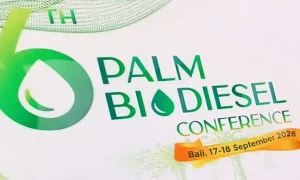
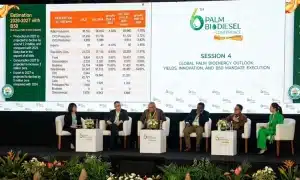
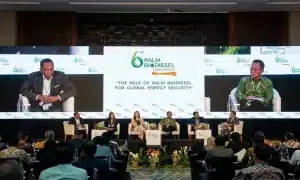
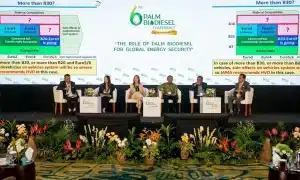
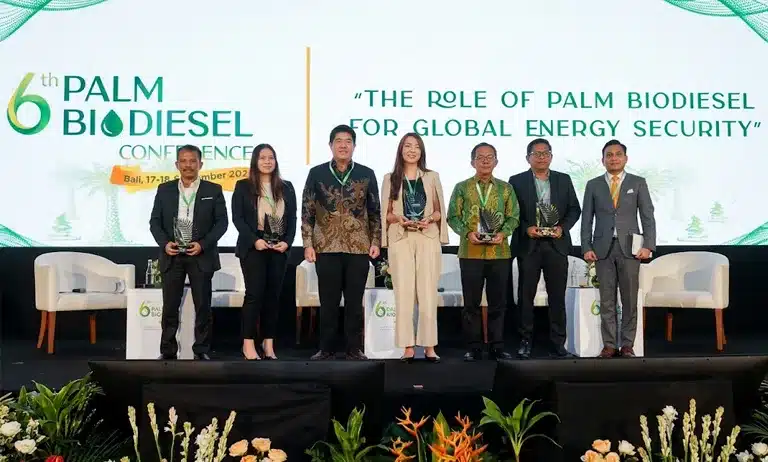
This was highlighted by Taufik Adityawarman, President Director of PT Kilang Pertamina Internasional (KPI), during a discussion at the 6th Palm Biodiesel Conference 2026, held in Nusa Dua, Bali, on Thursday, September 17, 2026.
The forum brought together government representatives, industry players, associations, and biodiesel stakeholders from various countries to discuss the development of palm based biodiesel and the broader energy transition.
121 Fuel Terminals Strengthen Distribution
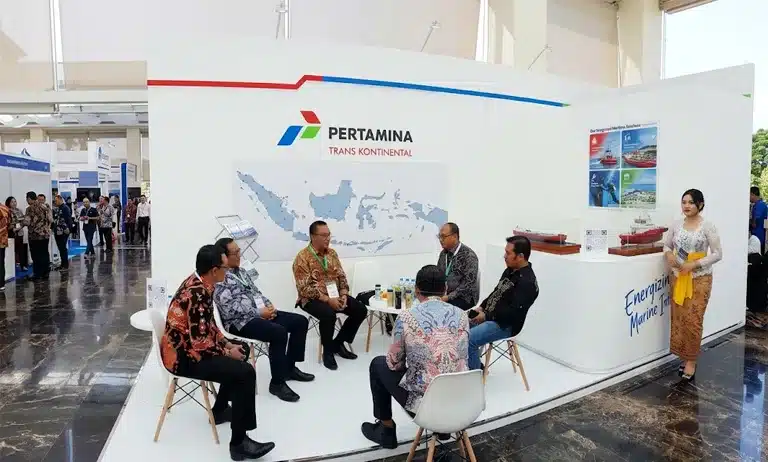
One of Pertamina’s key strengths in supporting the biodiesel program is its extensive energy distribution infrastructure. Pertamina operates 121 fuel terminals across Indonesia. This extensive network plays an important role in ensuring that fuel, including biodiesel, can be distributed to various regions throughout the country.
Supporting higher biodiesel mandates requires more than simply ensuring product availability. Adequate blending facilities, storage capacity, transportation systems, and distribution networks are also essential. The previous B40 implementation has been carried out nationwide. However, Indonesia’s vast geography continues to present logistical challenges in several regions.
One of the challenges highlighted involves distribution through the Kapuas River in West Kalimantan. To support B50 implementation, Pertamina has also prepared infrastructure, supply chain requirements, and technical parameter testing in cooperation with Lemigas, Indonesia’s government laboratory for oil and gas technology.
Cilacap and Dumai Develop Biofuel Products
Pertamina’s energy transformation extends beyond FAME based biodiesel. During his presentation, Taufik also highlighted the development of lower-carbon fuel products within Pertamina, including Hydrotreated Vegetable Oil (HVO) and Sustainable Aviation Fuel (SAF).
The Cilacap and Dumai refineries have developed capabilities related to biofuel based products, including HVO. Pertamina is also developing SAF as part of its efforts to provide lower carbon aviation fuel. In addition, Pertamina is developing green gasoline through co-processing technology using renewable feedstocks such as used cooking oil (UCO).
The development of these various biofuel products demonstrates that Pertamina’s energy transformation goes beyond increasing biodiesel utilization in the road transportation sector.
Moving Toward a Lower Carbon Energy Portfolio
According to Taufik, changes in the global energy landscape are encouraging Pertamina to continue transforming its business portfolio. Biodiesel, HVO, SAF, and green gasoline are becoming part of the company’s efforts to develop lower-carbon fuels and expand the use of alternative energy resources.
The strategy is also important for Indonesia because greater utilization of domestic resources can help strengthen energy security while reducing dependence on imported fossil fuels.
In this context, palm-based biodiesel has a strategic position because its feedstock is derived from a commodity produced domestically.
B50 and the Future of the Palm Oil Industry
The implementation of B50 is directly connected to Indonesia’s palm oil industry. As the biodiesel mandate increases, domestic demand for palm oil feedstock for the energy sector is also expected to expand. The Indonesian Government has promoted B50 as part of its strategy to strengthen national energy security and sovereignty.
On the downstream side, Pertamina plays an important role in ensuring that biodiesel can be processed, blended, stored, and distributed efficiently throughout Indonesia.
Pertamina data showed that as of early September 2026, 6,050 out of 6,412 service stations, or approximately 94%, had already distributed B50. Within the 121-terminal network, the Sintang Fuel Terminal was among the locations facing distribution challenges due to conditions along the Kapuas River.
Infrastructure Is Key to B50
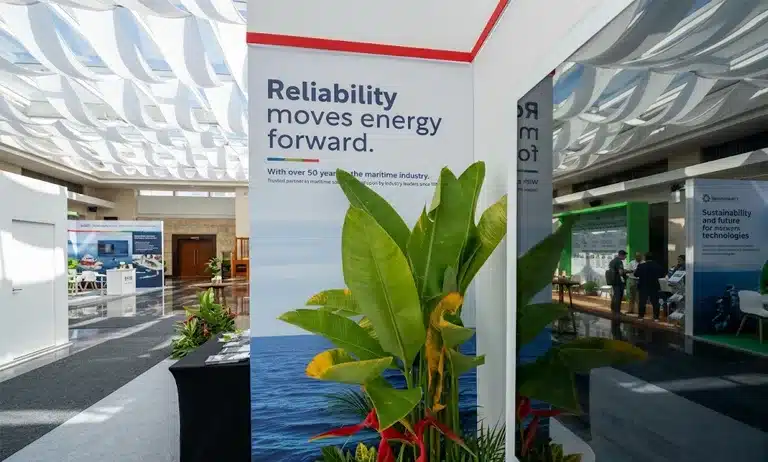
The discussions at the 6th Palm Biodiesel Conference in Bali highlighted that successful implementation of a higher biodiesel mandate depends not only on feedstock availability and production capacity. Infrastructure is equally critical, From refineries and blending facilities to fuel terminals, logistics systems, transportation networks, and service stations, every part of the supply chain needs to be sufficiently prepared to ensure that higher biodiesel volumes can be delivered consistently.
With 121 fuel terminals, an extensive service station network, and the continued development of biofuel products such as HVO and SAF, Pertamina is strengthening the foundation for Indonesia’s energy transformation. For the palm oil industry, these developments also create greater opportunities for palm oil to play a strategic role in Indonesia’s domestic energy ecosystem.
From the 6th Palm Biodiesel Conference in Bali, Pertamina’s message was clear: the journey toward B50 is not simply about increasing the biodiesel blending ratio, but also about building the readiness of the entire national energy supply chain.
Going forward, biodiesel, HVO, SAF, and other lower carbon fuels are expected to become increasingly important components of Indonesia’s energy transformation, while expanding the utilization of the country’s domestic renewable resources.
To subscribe or for more information, contact: Marketing Or Email
Need a research report? Please visit CDMI Consulting