Indonesian Palm Oil News (IPO News) — The SMILE program’s target has increased by 40% from its initial commitment of 5,000 smallholders. By the end of 2025, a total of 2,834 independent smallholders had obtained RSPO certification, covering 6,574 hectares of plantations.
CERTIFICATION TARGET INCREASED TO 7,000 SMALLHOLDERS
Asian Agri and Apical, together with Japanese consumer products company Kao Corporation, have increased their target under the Smallholder Inclusion for better Livelihood and Empowerment (SMILE) program to 7,000 independent oil palm smallholders certified by the Roundtable on Sustainable Palm Oil (RSPO) by 2030.
The revised target represents a 40% increase from the initial commitment of 5,000 smallholders. Launched in 2020, the program aims to expand independent smallholders’ access to sustainable plantation practices, technical assistance, and international markets for certified palm oil.
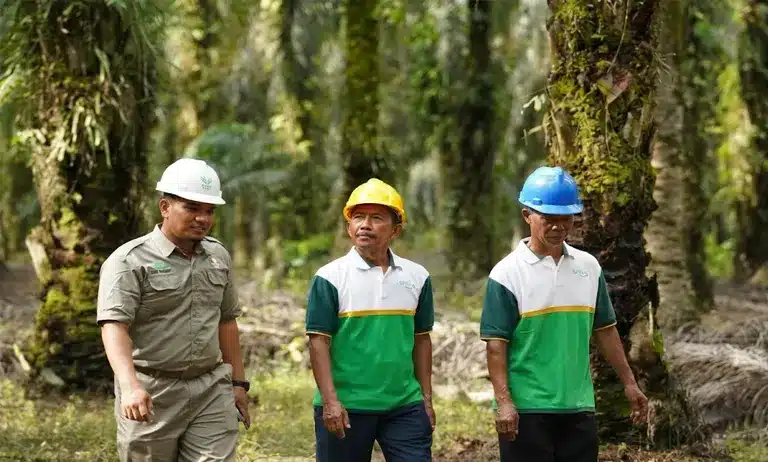
By the end of 2025, the SMILE program had helped 2,834 independent smallholders obtain RSPO certification. They manage plantations covering approximately 6,574 hectares across North Sumatra, Riau, and Jambi.
In addition, 4,698 smallholders had participated in the SMILE assistance program. During 2025 alone, another 1,461 smallholders successfully obtained RSPO certification.
THREE-COMPANY COLLABORATION STRENGTHENS THE PALM OIL SUPPLY CHAIN
The SMILE program combines the expertise of three companies whose roles complement one another across the palm oil industry value chain.
Asian Agri provides direct assistance to smallholders through training in Good Agricultural Practices (GAP), improved plantation management, farm record-keeping, and preparation for compliance with RSPO certification requirements.
Apical, as a global processor and trader of vegetable oils, supports supply chain development and market access for palm oil produced by independent smallholders.
Meanwhile, Kao Corporation supports the program through the purchase of RSPO Independent Smallholder Credits from participating farmers who have obtained certification. This credit mechanism provides economic incentives for smallholders’ commitment to sustainable palm oil production.
Kao also supports the use of adjuvant products, which are vegetable oil-based spray additives designed to help pesticides adhere more effectively to plant surfaces. This technology is expected to improve application efficiency and help reduce the use of agricultural chemicals.
IMPROVING SMALLHOLDER PRODUCTIVITY AND MARKET ACCESS
One of the main challenges facing independent oil palm smallholders is limited access to technical knowledge, financing, assistance, and certification processes. These constraints make it difficult for some farmers to meet international market requirements, which increasingly emphasize sustainability.
Through SMILE, smallholders receive training in plantation management, fertilizer application, crop maintenance, farm record-keeping, and land management practices that avoid burning.
Assistance is also provided to help farmers maintain their certification after obtaining it. This is important because RSPO certification is not simply about meeting requirements during an audit; it also requires the consistent implementation of sustainable practices.
Asian Agri’s Head of Sustainability, Ivan Novrizaldie, said that assistance for independent smallholders is aimed at improving plantation management while helping them prepare for certification.
Meanwhile, Apical’s Head of Sustainability, Tor Mooi See, noted that independent smallholders continue to face limitations in accessing technical assistance, financing, and certification. Through SMILE, the three companies aim to expand this support and connect more farmers with sustainable palm oil market opportunities.
2030 TARGET AND THE CHALLENGES FACING THE PALM OIL INDUSTRY
The increase in the target to 7,000 smallholders by 2030 reflects growing corporate attention to the role of independent smallholders in Indonesia’s palm oil supply chain.
The program’s success will not be measured solely by the number of farmers obtaining certification, but also by their ability to improve productivity, maintain sustainability standards, and secure better economic benefits from their plantation output.
For Indonesia’s palm oil industry, the involvement of independent smallholders is increasingly important because they represent a substantial part of the country’s oil palm plantation structure. Improving their capabilities and market access will also contribute to the international competitiveness of Indonesian palm oil.
Through the collaboration between Asian Agri, Apical, and Kao, the SMILE program is expected to serve as a partnership model connecting smallholders, processing companies, and consumer goods manufacturers in building a more sustainable palm oil supply chain.
IPO NEWS
Research-Based Palm Oil Media
Muslim M. Amin
Editor in Chief
Untuk berlangganan atau informasi lebih lanjut, hubungi: Marketing atau Email
Butuh Buku Riset? Silahkan kunjugi CDMI Consulting