Indonesian Palm Oil News (IPO News) — Authorities identified approximately 18,362 hectares of oil palm plantations within RAPP’s licensed area. The revocation has drawn attention from the forestry, palm oil, and broader RGE business sectors.
GOVERNMENT REVOKES RAPP’S FORESTRY CONCESSION
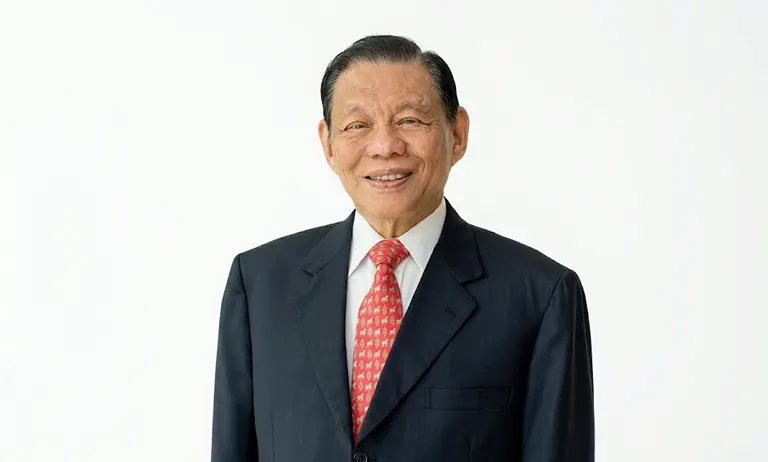
The Indonesian government has taken decisive action against PT Riau Andalan Pulp and Paper (RAPP), a pulp and paper company that forms part of APRIL Group under Royal Golden Eagle (RGE), the business group founded by entrepreneur Sukanto Tanoto.
Through the Forest Area Enforcement Task Force (Satgas PKH), the government has revoked RAPP’s Forest Utilization Business License (PBPH) in Riau Province, covering approximately 338,536 hectares.
The decision is stipulated in Minister of Forestry Decree No. 971 of 2026, dated November 19, 2026. The revocation was announced by Satgas PKH on November 20, 2026.
Satgas PKH spokesperson Barita Simanjuntak explained that the decision was based on several findings involving violations in forest-area utilization. These included recurring peatland fires, forest encroachment, and damage to protected areas.
Following the revocation, all activities within RAPP’s licensed PBPH area have been ordered to cease, and the area has returned to state control. The government has also emphasized that environmental restoration obligations and the company’s legal responsibilities remain in force.
18,362 HECTARES OF OIL PALM PLANTATIONS UNDER SCRUTINY
One finding that has attracted particular attention from Indonesia’s palm oil industry is the presence of approximately 18,362.74 hectares of oil palm plantations within RAPP’s licensed area.
In addition, Satgas PKH identified approximately 541.46 hectares of unauthorized mining clearings and around 211.54 hectares of damage to protected areas.
The government also highlighted recurring issues involving the protection of areas surrounding Tesso Nilo National Park, which have affected the conservation of Sumatran elephant habitats.
The oil palm findings are particularly noteworthy because RAPP operates in the pulp and paper industry, with its core business involving industrial forest plantations that supply wood fiber as raw material.
Accordingly, the presence of oil palm plantations within RAPP’s forestry concession does not automatically mean that all such plantations are directly owned or operated by RAPP. Nevertheless, the findings point to land-use issues that require further investigation.
For Indonesia’s palm oil industry, the case reinforces the importance of land legality, compliance with designated land-use classifications, and adherence to forestry regulations. This is particularly relevant as the government steps up enforcement against plantation activities located within forest areas.
RAPP AWAITS FURTHER OFFICIAL CLARIFICATION
In response to the decision, RAPP management stated that the company respects the government’s authority and remains committed to maintaining constructive communication with the relevant authorities.
In a statement dated November 20, 2026, the company said that, at that stage, it had received information regarding the license revocation through media reports. RAPP was still awaiting formal notification and further clarification before providing a response through the appropriate channels.
The company also highlighted the economic contribution of its operations in Riau. Together with APRIL Group, RAPP stated that its activities support more than 41,000 employees and hundreds of local businesses supplying goods and services.
According to an economic impact study cited by the company, its operations are estimated to support approximately 170,000 jobs in Riau and around 300,000 jobs nationwide.
RAPP also stated that its contribution to Riau’s Gross Regional Domestic Product (GRDP) exceeded Rp350 trillion over the 2016–2025 period.
IMPLICATIONS FOR RGE AND THE PALM OIL INDUSTRY
The revocation of RAPP’s PBPH license represents a significant development for Royal Golden Eagle (RGE), the business group founded by Sukanto Tanoto. RGE operates across several business sectors, including pulp and paper through APRIL Group, as well as fiber and other resource-based industries.
The development warrants close attention because it involves a substantial forestry concession, industrial activities, supply chains, employment, and the company’s relationship with communities in its operating areas.
However, the revocation of RAPP’s PBPH license does not automatically mean that all business operations of RGE or other companies within the wider group have been suspended. The immediate impact of the decision primarily concerns activities within RAPP’s revoked concession area.
For the palm oil industry, the next key issue will be how the government follows up on the oil palm plantation findings, including determining land status, the legality of plantation activities, and the responsibilities of the parties involved.
The RAPP case serves as a reminder that large-scale operations and substantial economic contributions do not exempt companies from complying with regulations governing the utilization of forest areas.
IPO NEWS
Research-Based Palm Oil Media
Muslim M. Amin
Editor in Chief
To subscribe or for more information, contact: Marketing Or Email
Need a research report? Please visit CDMI Consulting