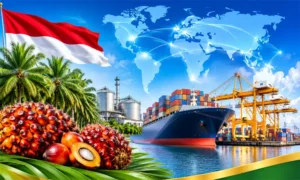
Indonesian Palm Oil News (IPO News), Bali – Indonesia’s palm oil industry continues to demonstrate its significant contribution to the national economy. The export value of Indonesian palm oil products reached US$28.84 billion during January–October 2026, representing an increase of approximately 60% compared with the same period last year.
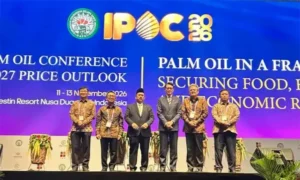
The achievement was highlighted by Coordinating Minister for Economic Affairs Airlangga Hartarto in his address at the opening of the 22nd Indonesian Palm Oil Conference (IPOC) 2026 and 2027 Price Outlook on Thursday, November 12, 2026, in Nusa Dua, Bali.
According to Airlangga, the increase in export value reinforces the position of palm oil as one of Indonesia’s strategic commodities, playing an important role in generating foreign exchange earnings, strengthening international trade, and supporting national economic activity.
The government also highlighted the contribution of the plantation sector to the national economy. In the third quarter of 2026, the plantation sector accounted for approximately 5.15% of Indonesia’s Gross Domestic Product (GDP), with palm oil serving as one of its largest contributors.
Palm Oil Production Projected To Approach 60 Million Tonnes
On the production side, the government estimates that Indonesia’s palm oil output will reach approximately 60 million tonnes in 2026. This represents an increase from the estimated 2025 production of around 56.55 million tonnes.
The increase is supported by various government initiatives, including the Smallholder Oil Palm Replanting Programme (PSR), plantation infrastructure development, and efforts to improve plantation productivity.
Meanwhile, domestic consumption is estimated to reach approximately 27.89 million tonnes in 2026. National exports of palm oil products are projected to stand at around 35 million tonnes throughout the year.
These projections highlight Indonesia’s substantial capacity to meet domestic demand while maintaining its position as a major supplier of vegetable oils to the global market.
Palm Oil Delivers Significantly Higher Productivity
In his presentation, Airlangga also highlighted the land-use efficiency advantages of oil palm compared with several other vegetable oil crops.
Oil palm productivity can reach approximately 4 tonnes of oil per hectare, while the productivity of sunflower, rapeseed, and soybean oils is generally below 0.7 tonnes per hectare.
This advantage is one of the key factors establishing palm oil as a strategic commodity in meeting growing global vegetable oil demand.
With its relatively high productivity, oil palm can produce substantial volumes of vegetable oil from a more efficient land area compared with several other oil-producing crops.
Government Strengthens ISPO And Support For Smallholders
In addition to increasing production and exports, the government emphasized the importance of ensuring the sustainability of the palm oil industry through the strengthening of Indonesian Sustainable Palm Oil (ISPO) certification.
The government continues to develop the ISPO information system to improve the integration of plantation certification and supply chain information. This initiative is expected to enhance transparency, meet sustainability requirements, and strengthen the competitiveness of Indonesian palm oil products in international markets.
Support for independent smallholders also remains a government priority. Various programmes are being developed, including the Smallholder Oil Palm Replanting Programme, plantation infrastructure support, educational scholarships, technical training, and capacity building for plantation workers and farmers.
These initiatives are aimed at improving productivity without relying on further plantation area expansion.
With export value reaching US$28.84 billion through October 2026 and annual production projected at approximately 60 million tonnes, the palm oil industry remains one of the key pillars of Indonesia’s economy.
Going forward, the industry’s challenges will extend beyond increasing production and export volumes. They will also involve maintaining productivity, strengthening downstream industries, improving smallholder welfare, and ensuring long-term sustainability amid intensifying global market competition.
To subscribe or for more information, contact: Marketing Or Email
Need a research report? Please visit CDMI Consulting