Indonesian Palm Oil News (IPO News) – Over the past three years (2023–2025), the production of Fresh Fruit Bunch (FFB) of AEP has shown a fluctuating trend. The highest FFB output was recorded at the North Sumatra plantations, followed by Central Kalimantan and Bengkulu plantations. Further details are presented in the table below :
| Plantations | FFB Production
‘000 mt |
Mature
‘000 ha |
Productivity
mt/ha |
|||
| 2024 | 2023 | 2024 | 2023 | 2024 | 2023 | |
| North Sumatra | 397.5 | 409.0 | 17.8 | 18.2 | 22.3 | 22.5 |
| Riau | 111.7 | 123.0 | 4.8 | 4.8 | 23.4 | 25.7 |
| Bangka | 18.6 | 21.1 | 2.4 | 1.7 | 7.6 | 12.3 |
| Bengkulu | 179.3 | 223.8 | 12.4 | 13.2 | 14.5 | 17.0 |
| Central Kalimantan | 297.2 | 312.8 | 16.4 | 15.4 | 18.1 | 20.4 |
| Total Indonesia | 1.004,3 | 1.089,7 | 55.8 | 53.3 | 18.7 | 20.4 |
| Terengganu, Malaysia | 15.6 | 12.5 | 3.4 | 3.4 | 4.6 | 3.6 |
| Group | 1.019,9 | 1.102,2 | 57.2 | 56.7 | 17.8 | 19.4 |
According to the analysis of IPO News that in 2025 total FFB production across all Anglo Eastern Plantation owned plantations increased by approximately 7% to 10%. As of 2024, the average age of AEP’s oil palm trees was 14 years, categorized as follows: Prime (39%), Young (25%), Immature (12%), and Old (24%). Over the last two years (2023–2024), the performance of all AEP’s mills processing FFB and Crude Palm Oil (CPO) is summarized in the table below :
| Mills | Processed FFB
‘000 mt |
CPO Production
‘000 mt |
OER
% |
|||
| 2024 | 2023 | 2024 | 2023 | 2024 | 2023 | |
| North Sumatra | 725.9 | 724.8 | 146.7 | 150.1 | 20.2 | 20.7 |
| Riau | 341.0 | 345.6 | 62.8 | 65.3 | 18.4 | 18.9 |
| Bengkulu | 548.6 | 633.9 | 109.1 | 129.9 | 19.9 | 20.5 |
| Central Kalimantan | 345.3 | 450.7 | 78.1 | 103.7 | 22.6 | 23.0 |
| Total Indonesia | 1.960,8 | 2.155,0 | 396.7 | 449.0 | 20.2 | 20.8 |
In addition to its own FFB production, AEP also sources FFB from external suppliers, including Plasma schemes and surrounding plantations operated by smallholders and local communities. Despite of intense competition from neighboring mills for external FFB supply, AEP remains committed to purchasing greater volumes of externally sourced FFB at competitive yet fair prices. In 2024, AEP’s FFB production consisted of FFB owed production (49.9%) and externally sourced FFB (50.1%).
According to IPO News’s observations, AEP’s performance in the last five years (2020-2024) had fluctuated. The peak of AEP’s business glory occurred in 2017 with revenues of US$ 291.90 million while the lowest performance was in 2019 with revenues of US$ 219.13 million. For more details, see the table below :
| Revenue Report | 2024 | 2023 | 2022 | 2021 | 2020 | 2019 |
| Sales | 372,263 | 370,435 | 447,619 | 433,421 | 263,818 | 219,136 |
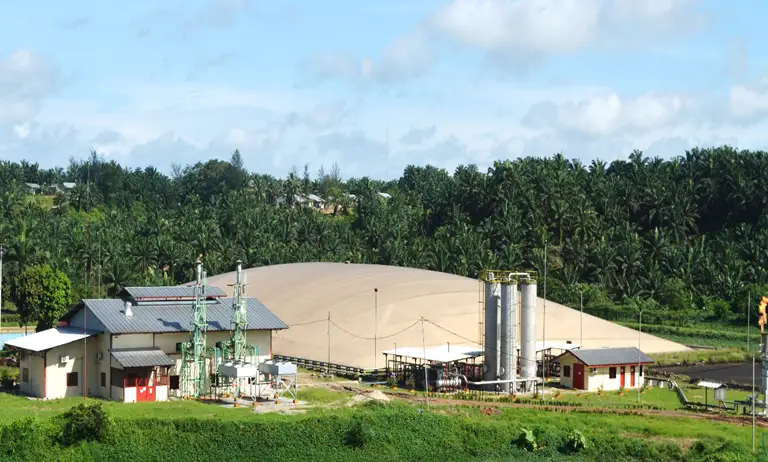
Until 2025, AEP owned 7 units of Palm Oil Plant (PKS) and four of which had biogas plants with a capacity of 5 MW. The newest biogas plant which was inaugurated in October 2020 was the Raja biogas plant. In 2020 the total biogas generating capacity was 18,900 MWh, an increase compared to that in the previous year of 17,200 MWh. Apart from being used alone, the remaining biogas plants were sold to the State Electricity Company (PLN). In 2020 sales of electricity surplus amounted to US$ 970,000. or an increase compared to that in the previous year of US $ 908,000,.
Based on the observation of IPO News from total 13 AEP’s subsidiaries, PT Tasik Raja (100% share ownership) and PT Alno Agro Utama (100% share ownership) had the highest revenues. In 2020 PT Anak Tasik posted revenue of US$ 59,166 or an increase compared to that in 2019 of US$ 45,786 while PT Alno Agro Utama in 2020 earned US$ 51,944 or an increase compared to that in 2019 which was US$ 40,403,.
Read more…
To subscribe or for more information, contact: Marketing Or Email
Need a research report? Please visit CDMI Consulting