Recognizing Farmers, Cooperatives And Partners As PalmCo Strengthen A More Productive, Professional And Sustainable Partnership ecosystem
Indonesian Palm Oil News (IPO News), Yogyakarta — Indonesia’s palm oil industry is not built solely on the strength of large plantation companies. Behind the resilience of the national palm oil industry are millions of smallholder farmers who play a critical role in the supply chain and in shaping the future of this strategic commodity.
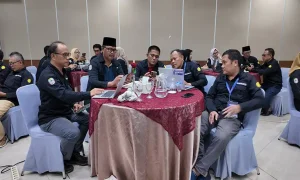
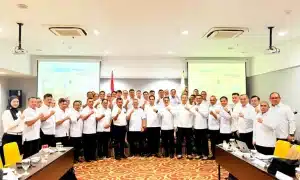
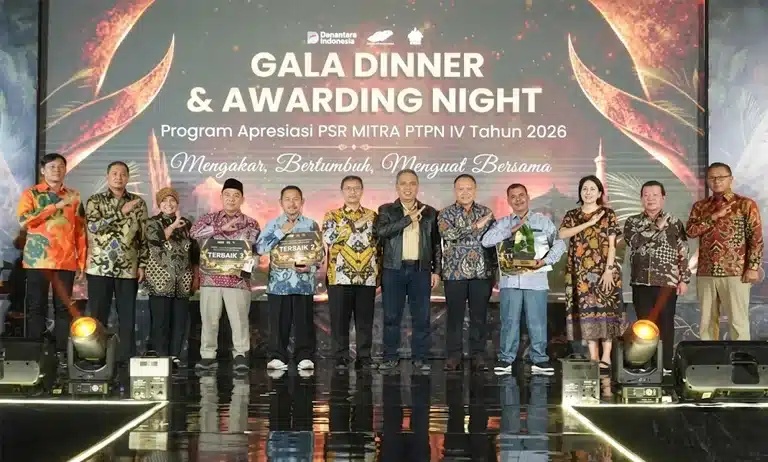
Recognizing the importance of smallholders, PT Perkebunan Nusantara IV (PTPN IV) PalmCo is placing stronger emphasis on building productive and sustainable partnerships with farmers. For the first time, PalmCo hosted the Gala Dinner and PSR Award 2026 at LPP Garden Hotel, Yogyakarta, on Friday, September 11, 2026. The event served as a form of appreciation for farmers, cooperatives, regional teams, TBS purchasing units and suppliers that have contributed to PalmCo’s partnership ecosystem.
More importantly, PSR Award 2026 reflects PalmCo’s broader strategy to strengthen the upstream downstream relationship with smallholder farmers. PalmCo President Director Jatmiko K. Santosa emphasized that partnerships with farmers are fundamental to the company’s long term sustainability. He stated that PalmCo is committed to growing together with smallholder farmers through partnerships that are transparent, productive, mutually beneficial and sustainable.
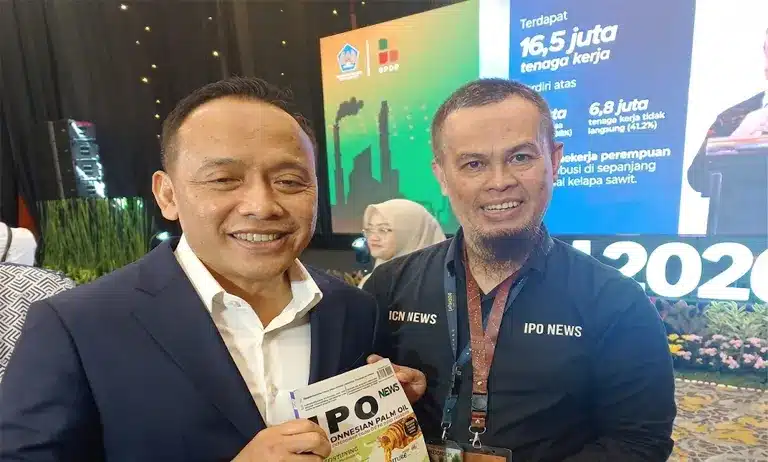
According to Jatmiko, strengthening these relationships is not only important for the company’s operational sustainability, but also for improving farmers’ welfare, strengthening Indonesia’s palm oil industry and creating sustainable added value for the country and society.
SMALLHOLDERS: A MAJOR FORCE IN INDONESIA’S PALM OIL INDUSTRY
PalmCo’s growing attention to smallholder farmers is supported by a compelling fact. PalmCo President Commissioner Desrial stated that smallholder plantations account for approximately 41–42% of Indonesia’s total palm oil plantation area.
This figure demonstrates that smallholders are far more than a supporting component of the national palm oil industry. They represent one of its major pillars. With such a significant share, improving smallholder productivity can have a broad impact on national palm oil production and the strength of the industry’s supply chain.
Conversely, if smallholder productivity fails to improve, the national palm oil supply chain will inevitably face challenges. For this reason, stronger relationships between plantation companies and farmers are becoming increasingly important, particularly partnerships focused on productivity, professionalism and long term sustainability.
PSR: MORE THAN JUST REPLANTING
The Smallholder Palm Oil Replanting Program (PSR) is one of the important instruments for addressing this challenge. For farmers, PSR is not simply about replacing old palm trees. It is about the future of their plantations, productivity, family income and the sustainability of their farming businesses for the next generation.
ASPEKPIR Chairman Setiyono described PSR as a source of hope for smallholder farmers. The success of PSR, he noted, should ultimately be reflected in higher productivity, improved family welfare, stronger farmer institutions and sustainable smallholder plantations for future generations.
This becomes increasingly important as productivity remains one of the key determinants of Indonesia’s competitiveness in the global palm oil industry. A properly replanted plantation using quality planting material, supported by good agricultural practices, appropriate fertilization and effective maintenance, can ultimately produce higher yields and better quality Fresh Fruit Bunches (FFB).
FROM AWARDS TO MEASURABLE PARTNERSHIPS
One of the notable aspects of PSR Award 2026 is that recognition was not based simply on the volume of FFB supplied. PalmCo applied measurable performance indicators. The awards covered categories including Best Plasma Plantation, Best PSR Region, Best FFB Purchasing Region, Best FFB Purchasing Unit and Best FFB Supplier.
For plasma plantations, for example, the assessment considered productivity achievements and the implementation of integrated management. For FFB suppliers, the assessment considered not only supply volume, but also consistency, FFB quality, legality and administrative compliance.
This approach sends an important message: PalmCo wants its partnership model to be based not merely on volume, but on productivity, quality, compliance, consistency and sound governance. Such an approach is important because a healthy partnership between farmers and plantation companies must create value for both sides.
Farmers gain opportunities for better productivity, market access and business development, while PalmCo benefits from a stronger, more consistent and better managed FFB supply base.
ACCELERATING PSR, STRENGTHENING FARMERS
The national PSR program still faces significant challenges, Director General of Plantations at the Ministry of Agriculture Heru Tri Widarto stated that since 2016, technical recommendations have been issued for approximately 440,000 hectares.
However, PSR realization through partnership channels remains around 27,000 hectares. This indicates that accelerating the program will require stronger collaboration among the government, plantation companies, farmers and strategic partners.
Heru has also encouraged stronger cooperation between PTPN IV PalmCo and plasma farmers, as well as faster issuance of technical recommendations. Acceleration is important to ensure that aging palm trees can be replanted promptly and subsequently managed using quality planting materials and good agricultural practices, This is where PalmCo has an opportunity to play a strategic role.
PALMCO AND THE SMALLHOLDER PALM OIL ECOSYSTEM
PalmCo’s commitment to smallholder farmers is also reflected in its growing FFB absorption. Company data shows that throughout 2025, PalmCo absorbed 3.26 million tonnes of FFB from smallholder farmers. By June 2026, absorption had reached 1.73 million tonnes, with approximately 30% of PalmCo’s industrial raw material supply coming from smallholders.
During the same period, PalmCo had supported 28,786 farmer families, covering approximately 54,148 hectares of plantation area. These figures indicate that the relationship between PalmCo and farmers extends beyond a simple buyer supplier transaction.
PalmCo is developing partnerships as part of a more integrated palm oil ecosystem, connecting plantations, farmers, cooperatives, FFB procurement and processing facilities. Such an approach strengthens the connection between the upstream and downstream segments of the palm oil industry.
FROM SMALLHOLDER PLANTATIONS TO THE FUTURE OF INDONESIAN PALM OIL
As Indonesia’s palm oil industry faces increasing demands for higher productivity, sustainability and competitiveness, strengthening smallholder plantations is becoming more important than ever. PSR Award 2026 sends a powerful message: farmers should not be viewed merely as suppliers of raw materials, but as strategic partners in building the future of Indonesia’s palm oil industry.
For PalmCo, productive farmers mean a stronger and more reliable FFB supply base. For farmers, a healthy partnership means greater opportunities for higher productivity, market certainty and improved welfare.
This is where the interests of companies and farmers converge. If these partnerships continue to be strengthened through farmer assistance, technology, quality planting materials, sound governance, market access and consistent plantation replanting, PSR can become more than a replanting program.
It can become a transformation movement for Indonesia’s smallholder palm oil sector. And when smallholder farmers become more productive, professional and prosperous, the benefits will extend far beyond farmers and plantation companies, Indonesia’s palm oil industry will become stronger as well.
STRONG FARMERS. STRONG PALM OIL. STRONGER INDONESIA.
To subscribe or for more information, contact: Marketing Or Email
Need a research report? Please visit CDMI Consulting