Indonesian Palm Oil News (IPO News), Jakarta — Building Partnerships, Enhancing Well-Being and Creating Opportunities for Communities Around Its Plantations.
Behind Indonesia’s vast palm oil industry are millions of smallholders, workers and communities whose livelihoods are closely connected to the growth of the sector. Therefore, the success of a plantation company should not be measured solely by plantation acreage, CPO production or business expansion, but also by the extent to which it creates meaningful benefits for the communities surrounding its operations.
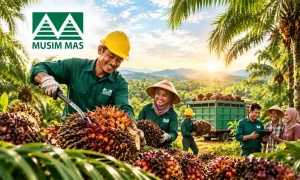
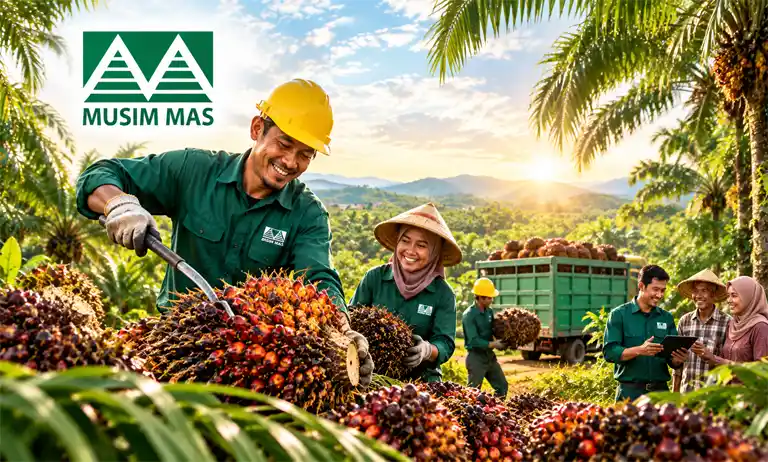
In this context, Musim Mas has built a long-standing approach that places smallholders, employees and local communities at the heart of its sustainability journey.
This commitment is reflected in the company’s sustainability strategy, which recognizes the importance of improving the livelihoods of smallholders, workers and communities. Its latest Sustainability Policy for 2026–2030 identifies “Thriving Smallholders & Landscapes” as one of three key impact areas, alongside Sustainable Production and Responsible Sourcing.
Farmers Are More Than Just Suppliers
For the palm oil industry, smallholders are an essential part of the supply chain. Musim Mas recognizes that a sustainable palm oil industry cannot be achieved without strengthening the capabilities and livelihoods of farmers.
Since 2015, Musim Mas has implemented various programs aimed at integrating independent smallholders into a sustainable palm oil supply chain. Its assistance goes beyond productivity improvement, covering good agricultural practices, environmental management, business management, legal requirements, access to financing and access to global markets.
This approach is important because the relationship between a company and farmers should go beyond the simple buying and selling of fresh fruit bunches. More importantly, it is about building farmers’ capabilities so that they can improve productivity while creating stronger economic opportunities for the long term.
Musim Mas’ Sustainability Report illustrates the scale of these initiatives. A total of 43,474 independent smallholders have been reached through various Musim Mas programs. The company has also trained 460 Village Extension Officers, who subsequently provided training to 6,723 farmers. Thousands of smallholders have also received support in pursuing RSPO and ISPO certification.
These figures demonstrate that farmer engagement is not treated as a short-term initiative, but as an important component of the company’s long-term sustainability strategy.
Being Present in the Community
The presence of a plantation company inevitably becomes closely connected with the daily lives of surrounding communities.
For this reason, Musim Mas has developed a range of social programs focusing on essential areas such as education, healthcare and infrastructure development.
In education, for example, the company provides educational facilities for the children of employees and surrounding communities. These initiatives include kindergartens as well as primary and secondary schools. Musim Mas also provides scholarships for students from underprivileged families and supports educational needs such as uniforms and books.
Such initiatives are important because education represents one of the most strategic forms of social investment. Better access to education provides younger generations in plantation communities with greater opportunities to develop their capabilities and build a better future.
Healthcare is another important area.
Musim Mas provides healthcare services for employees and local communities through health facilities in its operational areas. Programs include health examinations and vaccination initiatives, while the company’s healthcare facilities are also connected to Indonesia’s BPJS Health system.
CSR That Addresses Real Community Needs
Musim Mas’ corporate social responsibility programs also address a variety of basic community needs.
The company’s initiatives have included the development of wells, road improvements, medical assistance, financial support for community projects and other social programs in areas surrounding its operations.
According to the company’s 2023 Sustainability Report, Musim Mas recorded more than IDR 32.9 billion in CSR contributions, while its community programs also included educational facilities, clinics, childcare centers and other supporting facilities.
This approach demonstrates that CSR is not merely viewed as a ceremonial activity, but as an effort to create tangible benefits for the communities living around the company’s operations.
Employees as a Key Asset
Behind the operations of Musim Mas’ plantations, mills, processing facilities and business network are tens of thousands of employees who represent one of the company’s most important assets.
Musim Mas has stated that it employs nearly 38,000 people and places occupational safety, human dignity, workers’ rights and a positive working environment among its key commitments.
The company also provides wages and benefits as well as housing, electricity, water, education and transportation facilities for its employees. Based on living-standard and market-price surveys conducted together with workers’ unions, Musim Mas has stated that the combined value of wages and facilities provided is approximately 70% higher than the minimum decent-wage standard set by local governments.
Beyond basic welfare, Musim Mas also places emphasis on employee development through training, technical skills enhancement, health and safety programs.
For a company operating at the scale of Musim Mas, investment in human resources is essential not only to maintain productivity, but also to create a healthier and more supportive workplace.
Building Long-Term Relationships
One of the greatest challenges facing the plantation industry is building harmonious and sustainable relationships with all stakeholders.
Musim Mas considers relationships with farmers, employees, communities, suppliers, customers and other stakeholders to be an integral part of its sustainability strategy. The company also recognizes the well-being of local communities in its operational areas as an important component of its business approach.
This reflects the company’s view that a plantation is not an isolated business entity, but part of a broader economic and social ecosystem.
When plantations grow, farmers are expected to benefit as well. When companies create employment opportunities, local communities gain greater access to economic opportunities. And when education and healthcare facilities are developed, the quality of life within surrounding communities can improve.
This is an important foundation for building strong and lasting relationships between companies and the communities around them.
From Plantations Towards a Better Future
Musim Mas is now entering a new phase through its Sustainability Policy and Sustainability Roadmap for 2026–2030. The strategy further strengthens the company’s focus on sustainable production, responsible sourcing, and empowering smallholders and landscapes.
For Indonesia’s palm oil industry, this approach is becoming increasingly important.
The future of the industry will not be determined solely by its ability to increase production. It will also depend on the ability of companies to build healthy relationships with communities, improve employee welfare, strengthen smallholders, protect the environment and create sustainable economic value.
Musim Mas has developed a wide range of initiatives in these areas over many years.
Ultimately, the success of a plantation company is not simply about how much palm oil it produces, but also about how many lives are able to grow together with the company.
And throughout Indonesia’s long palm oil journey, building strong relationships with farmers, employees and communities remains one of the most valuable investments in ensuring that the industry continues to be resilient, inclusive and sustainable for generations to come.
To subscribe or for more information, contact: Marketing Or Email
Need a research report? Please visit CDMI Consulting